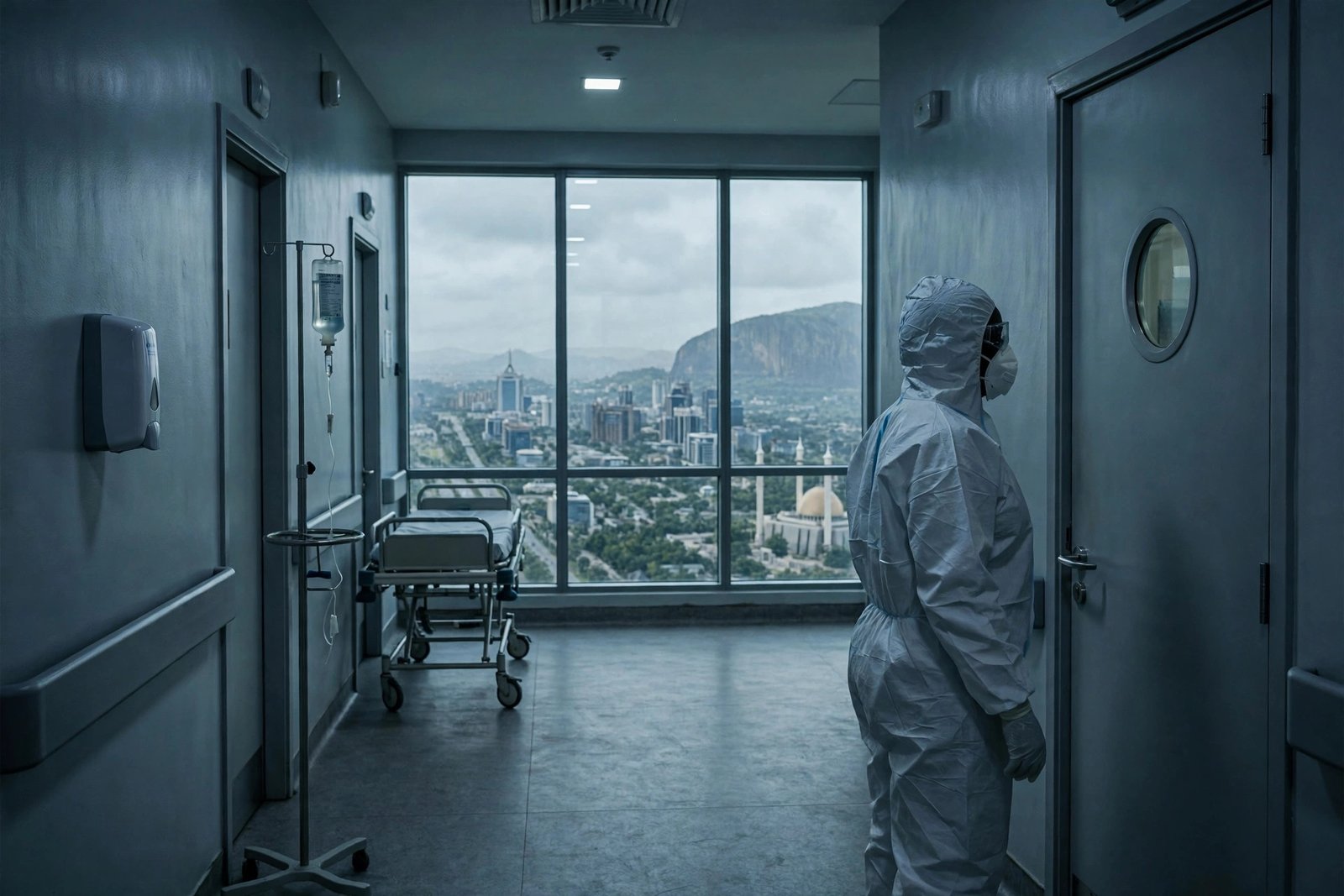
Nigeria has confirmed its first Ebola case in more than ten years, in the capital Abuja. The patient is a woman who recently travelled from Uganda. She is in isolation and receiving medical care, while health teams trace 44 people she may have come into contact with.
What happened
The Health Ministry announced the case on Tuesday, 20 October 2026, after laboratory tests confirmed the Bundibugyo type of the Ebola virus. The woman had arrived in Nigeria by international flight from Uganda and began to feel unwell on 7 October, a few days after her arrival. She went to a private hospital in Abuja on 11 October, where she was treated for several days before doctors tested her for Ebola. The result came back positive on 20 October.
Health officials say the woman had recently been in the eastern Democratic Republic of Congo on business and passed through Uganda in early October. Uganda itself has no active Ebola cases right now — it declared its own outbreak over in late August.
A growing regional outbreak
Nigeria is now the fifth country to detect this Ebola outbreak since it was first declared in the Democratic Republic of Congo in mid-May 2026. That outbreak is already the deadliest in Congo's history, with more than 9,500 cases and over 4,200 deaths recorded by 18 October. Kenya has reported nine cases this month, and one case linked to Congo was found in the Netherlands.
The head of the Africa Centres for Disease Control and Prevention, Jean Kaseya, called the situation "an extremely serious threat". He said the outbreak is already the most widely spread in history, touching several countries across three regions of Africa. The Bundibugyo strain kills roughly half of the people it infects, and there is still no approved vaccine or treatment for it.
How Nigeria is responding
Health Minister Muhammad Ali Pate said the government is "doing everything possible to contain this case". Contact tracing is already under way. Of the 44 contacts identified so far, most are health workers. The list also includes the patient's husband, who lives with her in Abuja. Officials are also trying to reach passengers who travelled on her flight, though they do not believe she was showing symptoms while flying.
The World Health Organization is supporting Nigeria with case investigation, contact tracing, infection control and protective equipment for health workers. Infection control has been stepped up at the private hospital where the woman was treated.
Nigeria actually began preparing months ago. It set up an Ebola task force in June, and its disease control agency increased surveillance in recent weeks after cases appeared in Kenya. The government has now told hospitals across the country to stay alert: isolate suspected cases quickly, follow strict infection control, and report anything unusual at once.
What the public is told
The health minister asked Nigerians to stay calm but take care: wash hands regularly and avoid contact with the blood or body fluids of anyone who might be ill. Ebola spreads only through close contact with the fluids of an infected person, not through the air.
Health officials say the next few days of contact tracing will show whether the virus has spread further. For now, the case appears to be imported and contained — but the region-wide outbreak means no country can afford to relax.