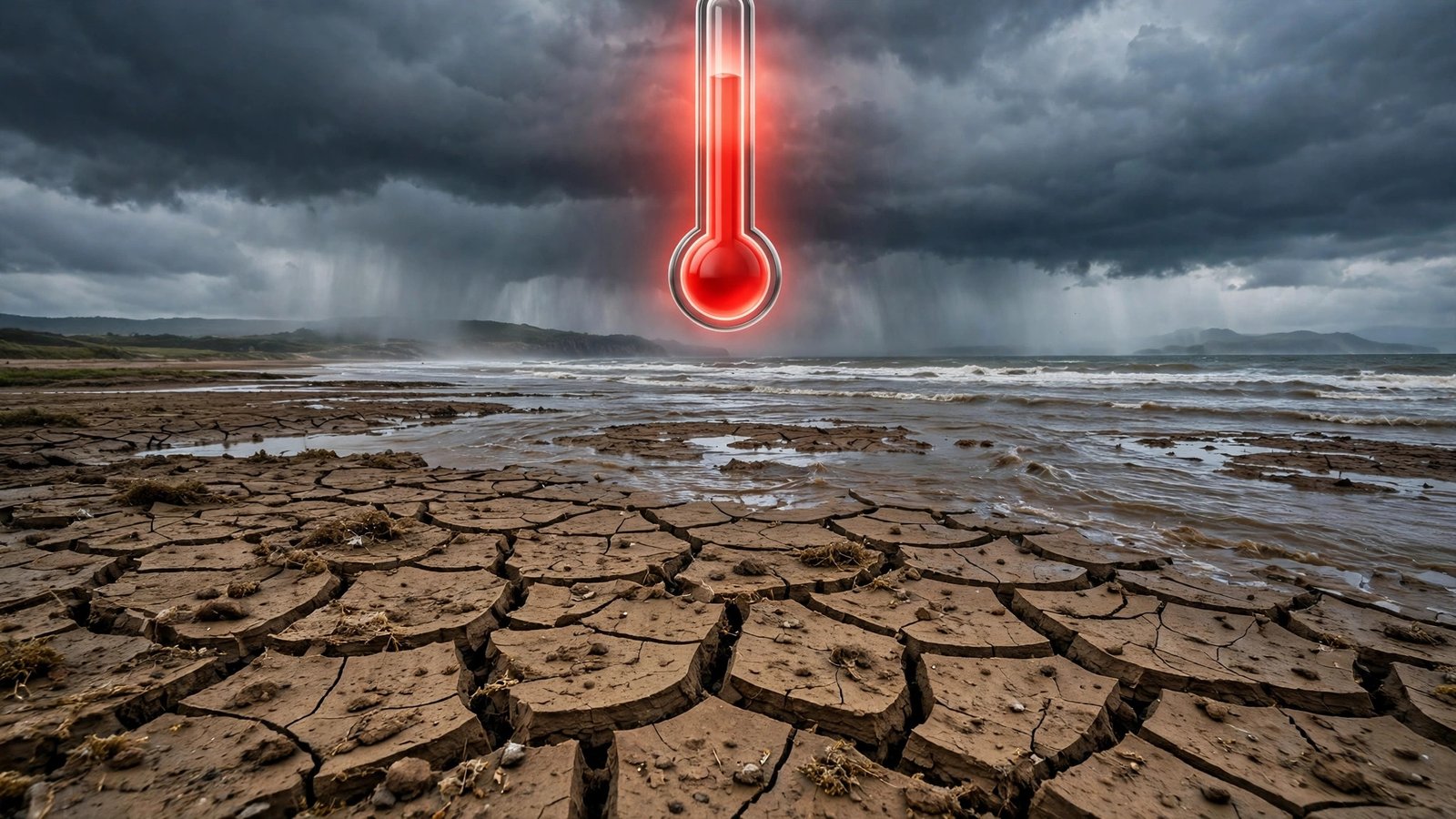
On 21 October 2026, the United Nations delivered its bluntest climate message yet. In its annual Emissions Gap Report, the UN Environment Programme (UNEP) said that the world is heading for around 2.6°C of warming by the end of this century — and that any realistic chance of keeping warming to the famous 1.5°C limit has been "lost" after decades of insufficient action.
The report lands just weeks before world leaders gather for the COP31 climate summit in Antalya on 9 November 2026. UN chief Antonio Guterres used unusually direct language: "The world can no longer avoid overshooting the 1.5-degree limit, and the consequences are already devastating."
Here is what the report actually says, why this year’s findings are worse than last year’s, and what a 2.6°C world would mean for ordinary people — including your wallet.
The three numbers that matter
The report gives three different answers to the question "how hot will it get?" depending on what countries actually do:
- 2.8°C — if governments stick with only their current policies, the laws and plans already on the books.
- 2.6°C — if every country fully delivers the climate pledges it has already made on paper.
- 2.1°C — in the most optimistic case, where every pledge is implemented and no one backslides.
The gap between these numbers is the whole point of the "Emissions Gap Report". The gap between what countries promise and what their policies actually deliver is still wide. And even the optimistic 2.1°C is well above the 1.5°C target that nearly 200 countries agreed to in Paris in 2015.
Why the 1.5°C goal is "lost"
The Paris Agreement asked countries to keep global warming "well below" 2°C and to try hard for 1.5°C. For years, scientists and diplomats spoke of 1.5°C as a guardrail — the line beyond which climate damage turns from serious to dangerous.
UNEP now says that line will be crossed. Global greenhouse gas emissions in 2025 were roughly the same as the record levels of 2024, with carbon dioxide from burning coal, oil and gas actually rising slightly. Emissions are supposed to be falling sharply. Instead, as Guterres put it, "emissions remain at record levels. And national climate plans and current policies fall dangerously short".
Experts now treat a temporary overshoot of 1.5°C as likely. Returning to 1.5°C after that would require two enormous things at once: very rapid emission cuts — about 18% by 2030, 45% by 2035 and 69% by 2040, measured against 2025 levels — and pulling roughly 320 gigatonnes of CO2 back out of the atmosphere over the course of this century. The report warns that carbon removal on that scale faces major technical, economic and scaling challenges. In plain English: the technology and money to do it do not exist at the needed scale today.
Why this year’s report is gloomier than last year’s
Two things made the outlook worse. First, the report’s authors point to the United States stepping back from prior climate commitments under President Donald Trump, which took a big chunk of expected emission cuts off the table. When the world’s largest economy pulls back, the global numbers move.
Second, scientists have revised some historical emissions data upwards — meaning the starting point was worse than previously thought. When you discover the hole is deeper than you believed, climbing out of it takes longer.
The result is a report that reads less like a warning and more like a verdict: the easy path is gone, and the harder path requires action far beyond anything governments are currently doing.
What 2.6°C actually looks like in real life
Climate numbers can feel abstract. Guterres translated them into the events filling the news: "Deadly floods, brutal heatwaves, raging wildfires, lost lives, crippled economies, deepening inequalities, and those least responsible are suffering first and worst."
That last phrase matters. The countries that contributed least to the problem — poor nations in Africa, Asia and island states — are hit first and hardest by floods, crop failures and rising seas. Meanwhile, the same week the report was published, heavy rainfall that began on 19 October 2026 caused severe flooding across south-eastern France, from the Herault department to the Bouches-du-Rhone, forcing dozens of evacuations around Marseille and Montpellier.
At 2.6°C, scientists expect more of all of this: heatwaves that last longer and cover wider areas, droughts that cut harvests, storms that destroy more homes, and sea levels that keep rising even after emissions stop. No country is immune, the report notes — rich countries pay through damaged infrastructure, higher insurance costs and stressed health systems.
COP31 in Antalya: what to watch
The UN timed the report to pressure governments before COP31, which opens in Antalya on 9 November 2026. The G20 countries — which produce the overwhelming share of global emissions — are in the spotlight.
Three things to watch at the summit: whether big emitters announce deeper cuts to their national plans, whether rich countries put real money behind climate finance for poorer nations, and whether there is any credible plan for the carbon removal the report says is now unavoidable. Past summits have produced more promises than policies. The 2.6°C figure is a reminder that promises alone have stopped working.
What this means for your money
Climate change is no longer only an environmental story. It reaches straight into household budgets:
- Food prices: droughts and floods hit harvests. When crops fail, bread, rice and cooking oil get more expensive everywhere — including Pakistan, which imports much of its edible oil.
- Insurance and repairs: floods and storms are already pushing insurance prices up worldwide. If your home or stock is uninsured, one bad event can wipe out years of savings.
- Energy bills: extreme heat raises demand for cooling, and energy systems under stress mean higher prices and more blackouts.
- Supply chains: ports, roads and factories can shut down in extreme weather. For sellers who import goods, that means delays and higher freight costs — and buyers see higher shelf prices.
- Investment risk: businesses and investors are starting to price climate risk into assets. Property in flood-prone areas and companies with long carbon-heavy supply chains may lose value faster.
Practical steps for ordinary people: buy insurance where it is affordable, avoid building or buying in known flood zones, build a small emergency cash buffer, and keep an eye on food and energy prices so sudden spikes do not catch you off guard. None of this solves the climate crisis — that is governments’ job — but it protects your own household from its first blows.
The bottom line
The UN’s message on 21 October 2026 was historic because of its honesty: the 1.5°C era is over, and the question is no longer whether we overshoot but by how much and for how long. The difference between 2.1°C and 2.8°C is still enormous for the world’s poorest people — and for the price of bread, the safety of homes, and the stability of economies everywhere. What governments decide in Antalya in November will help determine which number we land on.
Frequently asked questions
What is the Emissions Gap Report?
It is an annual report by the United Nations Environment Programme (UNEP) that measures the gap between what countries promise to do about climate change and what their actual policies are on track to deliver. The 2026 edition was published on 21 October 2026.
Why is 1.5°C considered "lost"?
Because emissions stayed at record levels in 2025 instead of falling, and because a temporary overshoot of 1.5°C is now considered likely by UN experts. Returning to 1.5°C after overshooting would require cuts of about 18% by 2030, 45% by 2035 and 69% by 2040 compared to 2025 — plus removing around 320 gigatonnes of CO2 from the atmosphere this century, which is not currently possible at scale.
What is the difference between 2.6°C and 2.8°C of warming?
Current policies alone lead to roughly 2.8°C by 2100. If countries fully implement all the climate pledges they have made on paper, warming drops to about 2.6°C. An optimistic scenario — every pledge kept, no backsliding — gives 2.1°C. Every fraction of a degree avoided means less flooding, fewer deadly heatwaves and smaller economic losses.
Why is the outlook worse than last year’s report?
Two main reasons given by the report’s authors: the United States withdrew from prior climate commitments under President Donald Trump, and scientists revised historical emissions data upward, meaning the starting point is worse than previously thought.
What is COP31 and when is it?
COP31 is the annual UN climate summit, scheduled to start on 9 November 2026 in Antalya. World leaders will negotiate new emission-cut commitments and climate finance for poorer nations. The UN intends the Emissions Gap Report to increase pressure on G20 countries before the summit.
How will climate change affect my daily expenses?
Mainly through food prices (droughts and floods hit harvests), energy bills (extreme heat and stressed grids), insurance costs (more weather damage), and supply-chain disruptions (which raise the price of imported goods). Households can prepare by building emergency savings, buying insurance where affordable, and avoiding flood-prone property.
Sources: UNEP Emissions Gap Report 2026 coverage by Malay Mail (21 Oct 2026), The Manila Times (21 Oct 2026), Particle News (21 Oct 2026); AFP reporting on south-eastern France floods, 19–20 Oct 2026.