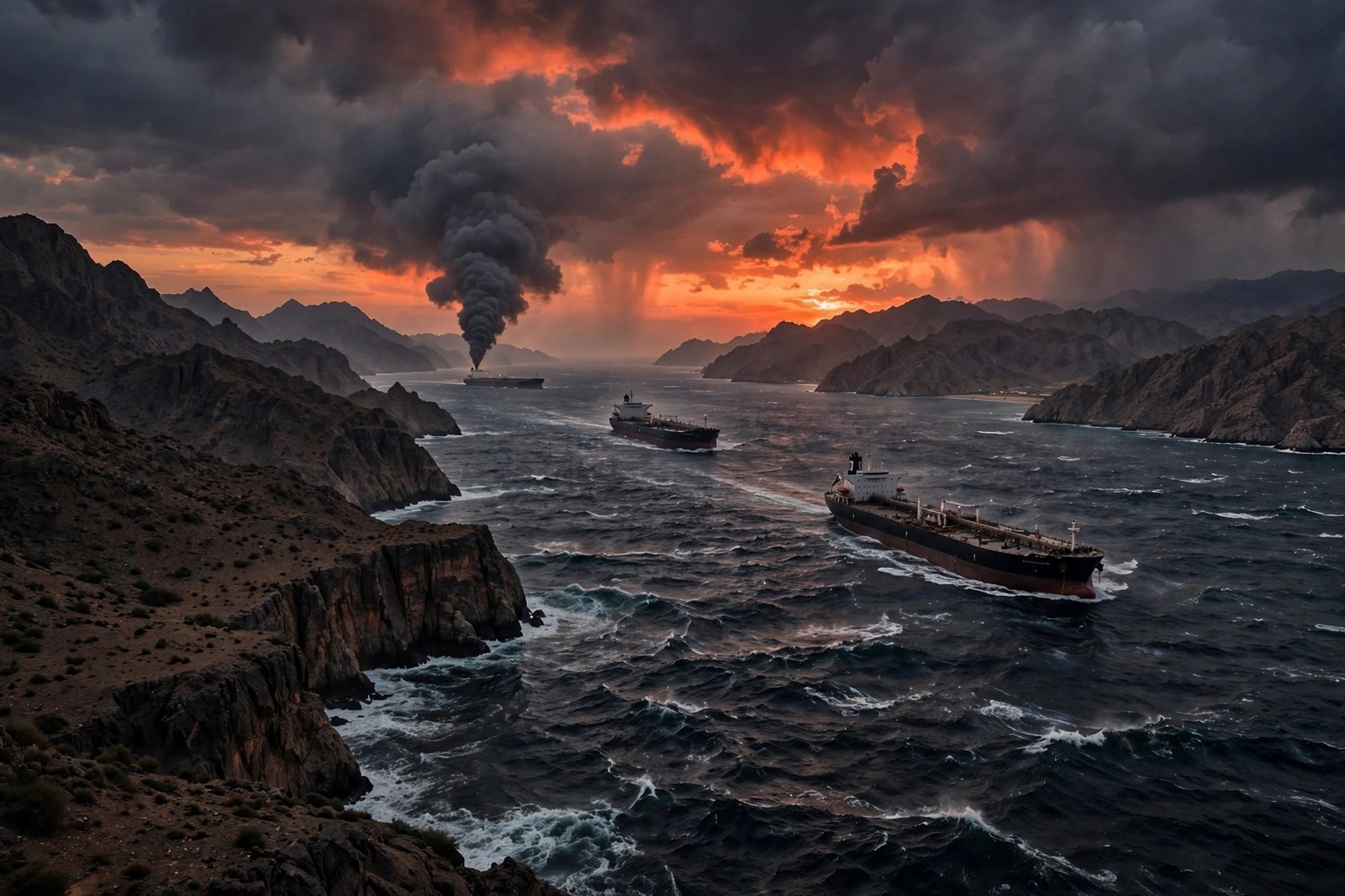
The Strait of Hormuz, the narrow waterway that carries a large share of the world's oil, is back at the center of global attention. Over the weekend, Iran said two oil tankers caught fire after striking naval mines in the strait, while Tehran put forward a seven-day plan it says could reopen the waterway if Washington accepts its terms.
Two Tankers Reported Hit by Mines
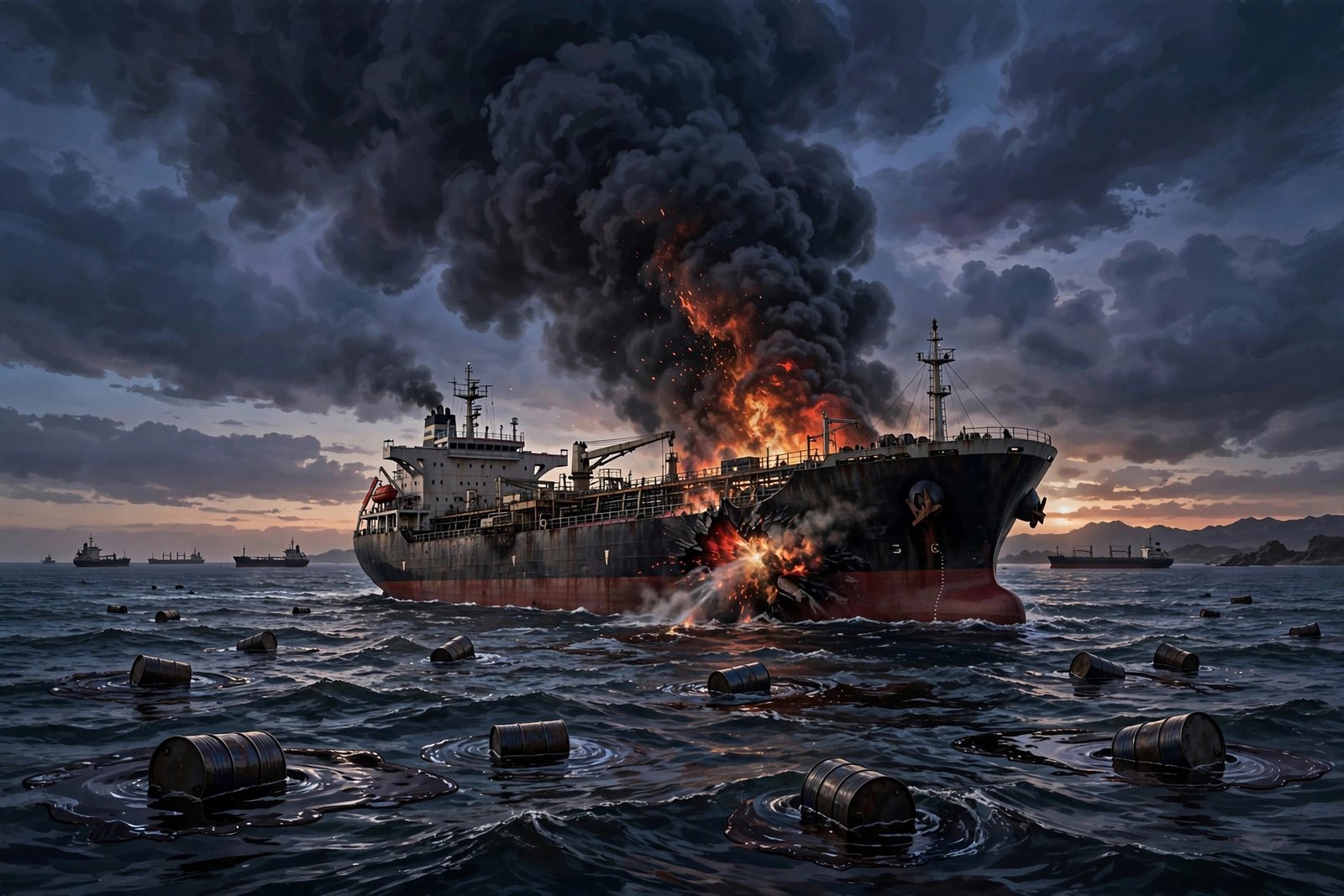
Iran's Revolutionary Guards Navy said on Saturday that two tankers had hit naval mines while crossing the strait and caught fire, according to the official news agency IRNA. State media reported that both ships were carrying about two million barrels of crude oil each.
IRNA said the vessels had switched off their positioning and radar systems and had tried to use a route that Iran had not authorised. The Revolutionary Guards also said that one tanker had tried to cross "with US support" while the second ship was left unable to move after the strike. These claims had no independent confirmation at the time of writing.
Iran's army had already said earlier in the week that two tankers caught fire on Thursday and Friday in what it called a "prohibited zone" in the Gulf of Oman. Maritime monitors also reported that two tankers were struck in waters off Saudi Arabia on Friday.
A Week of Record Attacks on Shipping
The mine incidents come at the end of one of the most dangerous weeks the strait has seen in months. Maritime security sources told Reuters that attacks on tankers in the week of September 28 to October 5 hit the highest weekly total since the conflict between the US, Israel and Iran began in late February. At least twelve attacks on oil, gas and chemical tankers were recorded in that week alone.
Last Sunday was the worst single day yet: six vessels were attacked in or near the strait, according to the security firm Vanguard, the UN shipping agency IMO and the UK maritime agency UKMTO. A container ship and a bulk carrier sank near the strait on Wednesday after being hit by projectiles, and a cargo vessel carrying more than 2,500 containers went down earlier in the week after a fire broke out on board.
The flow of oil through the waterway has collapsed. Tracking data from Kpler showed nearly 20.8 million barrels a day passing through on October 8, falling to just 2.9 million barrels on October 11. Before the war, about one-fifth of all the oil used around the world moved through the strait.
Why Prices and Inflation Are Rising
When oil cannot move safely through Hormuz, the world pays more for fuel. Shipping costs jump because insurers demand higher premiums, ships take longer routes to avoid danger, and some companies simply refuse to sail through the area. That push on energy prices feeds directly into inflation, raising costs for transport, food and factories far beyond the Middle East.
Iran says it is stepping up its strikes in response to a US naval counter-blockade of its ports and tougher sanctions imposed last month. The Revolutionary Guards commander warned this week that any vessel sailing with its navigation systems switched off would be treated as "hostile".
Iran's Seven-Day Plan
In the middle of the crisis, Iran's Foreign Minister Abbas Araghchi told reporters in Baghdad on Sunday that Tehran had given Washington a seven-day plan to end the standoff. Under the plan, he said, the Strait of Hormuz could reopen on the sixth day and talks could resume on the seventh day if the US meets Iran's conditions.
Those conditions include an end to fighting across regional fronts, lifting the US naval blockade on Iranian ports, easing sanctions on Iranian oil exports and releasing Iranian assets frozen abroad. Araghchi said Tehran was reviewing comments Washington had sent back on the proposal, but he questioned whether the US side was sincere about a deal.
For his part, US President Donald Trump ruled out the most extreme option. "I wouldn't use nuclear," he told the Newsmax news site in an interview on Thursday, when asked about a nuclear strike on Iran.
What Comes Next
The coming week will show whether the seven-day plan leads anywhere or whether the standoff deepens. Shipowners and insurers are watching every transit through the strait, and energy markets are moving on each new report of an attack.
For ordinary people, the stakes are simple: a longer closure or more attacks on ships will keep fuel prices high and put more pressure on household budgets around the world. A reopening of the strait, on the other hand, would quickly ease those pressures. The world is watching to see which way it goes.